The Great Pharos of Alexandria
Imagine standing tall, my white marble gleaming under the bright Mediterranean sun, my mighty form a constant sentinel by the shimmering sea. The salty spray kissed my stone, and the bustling sounds of ships arriving and departing from Alexandria’s busy harbor filled the air. For centuries, I was more than just a structure; I was a promise of safety, a beacon of hope for sailors navigating these ancient waters. The city of Alexandria, a vibrant hub of trade and learning, bustled around me, its energy a constant hum that I, a silent guardian, absorbed. My purpose was clear, though spoken in the language of stone and light: to guide, to protect, to be a landmark against the vast expanse of the sea and sky. The gentle lapping of waves against my base was a lullaby, while the cries of gulls overhead were my companions as I watched over the mariners who depended on my steadfast presence.
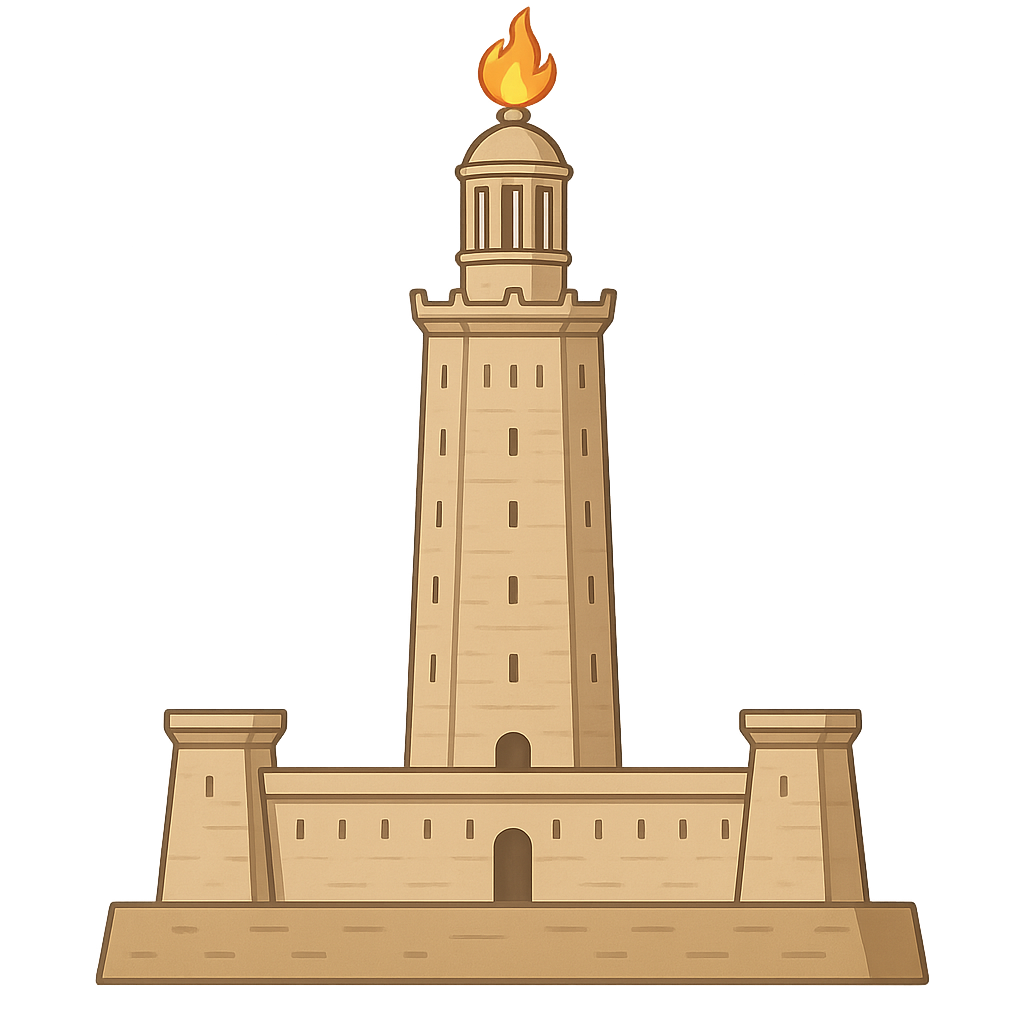
My story began with a grand vision from King Ptolemy I Soter of Egypt, a ruler with an ambitious spirit. He wanted Alexandria to be not just a prosperous city but also a safe haven for its many visitors and traders. Around 280 BCE, construction started on me, a monumental task. My son, King Ptolemy II Philadelphus, continued this incredible endeavor, ensuring my completion. The motivation was simple yet profound: to create a lighthouse that would shine brightly, guiding countless ships safely into our thriving harbor. Think of the marvel of engineering! I was constructed with gleaming white marble, its polished surface reflecting the sunlight, and my topmost lantern, it's said, was adorned with a magnificent bronze mirror. Skilled architects and thousands of laborers poured their knowledge and strength into my creation on the island of Pharos, a testament to the ingenuity of the Hellenistic period. My light, a powerful flame visible for miles, was a marvel, a testament to human ambition reaching for the heavens. I was a symbol of our civilization's reach and its dedication to progress and safety.
But I was far more than just a functional lighthouse; I was a symbol of Alexandria's unparalleled power, wealth, and sophisticated culture. My existence declared to the world that this city was a center of innovation and importance. My primary role was to illuminate the path for weary sailors, especially when the moon hid its face or a thick fog rolled in from the sea. My light, possibly amplified by a cleverly angled mirror, cut through the darkness, preventing devastating shipwrecks and ensuring that goods and people arrived safely. It’s no wonder that I became celebrated as one of the Seven Wonders of the Ancient World! Scholars, merchants, and travelers from distant lands would gaze up at my immense height, marveling at my brilliance. My structure was a triumph, with distinct levels, each one more impressive than the last, culminating in the lantern room at my summit. Some tales even speak of a magnificent statue that crowned my very top, gazing out over the city and the sea, a silent witness to the unfolding history below.
Over the long centuries, the powerful forces of nature began to wear me down. Tremors from earthquakes, one after another, rattled my foundations. Slowly, parts of me crumbled, and sections of my magnificent structure succumbed to the sea, sinking beneath the waves. Yet, my story did not truly end with my physical collapse. The very idea of me, the concept of a grand, guiding light, inspired the creation of countless other lighthouses and beacons across the globe. These new structures, built with the same spirit of protection and guidance, carried my legacy forward. My light may have faded from the ancient world, but the powerful symbol of a beacon, representing hope, safety, and the pursuit of knowledge, continues to shine brightly in our hearts and minds, reminding us of the enduring power of human ingenuity and the quest to illuminate the unknown.
Reading Comprehension Questions
Click to see answer