One Giant Leap: My Journey to the Moon
Long before I ever saw the stars up close, I was just a boy in Ohio with my eyes turned toward the sky. My name is Neil Armstrong, and my story didn’t begin in a rocket, but in a field near my hometown of Wapakoneta. I was completely captivated by airplanes. My bedroom was a hangar for model planes I carefully built, each one a promise of adventure. I’d spend my allowance on aviation magazines, studying the designs and dreaming of the day I’d pilot one myself. That day came sooner than I expected. When I was just six years old, my father took me for a ride in a Ford Trimotor airplane, a loud, rattling machine they called the 'Tin Goose.' As we lifted off the ground, I wasn't scared; I was home. The world below became a patchwork quilt of greens and browns, and I felt a profound sense of freedom and possibility. I didn’t know it then, but that single flight lit a spark in me that would eventually carry me far beyond the Earth’s atmosphere. It taught me that the grandest journeys often begin not with a roar, but with a quiet, persistent dream.
That dream of flight guided me through my life. I became a Navy pilot, and later, a test pilot, flying experimental aircraft to their absolute limits. It was thrilling, demanding work, but something even bigger was on the horizon. In 1962, I was selected to join NASA’s astronaut corps. The training was the most intense challenge I had ever faced. We were spun in centrifuges to simulate the crushing force of gravity during launch, and we practiced for hours in giant pools to get used to the feeling of weightlessness. We spent countless days in simulators, rehearsing every single moment of the mission until it was muscle memory. It was during this time that I formed an unbreakable bond with my crewmates for the Apollo 11 mission: Buzz Aldrin and Michael Collins. Buzz, the Lunar Module Pilot, was brilliant and focused, the perfect person to have by my side on the Moon’s surface. Michael, our Command Module Pilot, had the crucial job of orbiting the Moon alone, waiting for our return. He was our lifeline to home. We were three men with different jobs, but we shared one singular, monumental goal. We trusted each other completely, knowing that our lives and the success of a mission for all humankind depended on our teamwork and dedication.
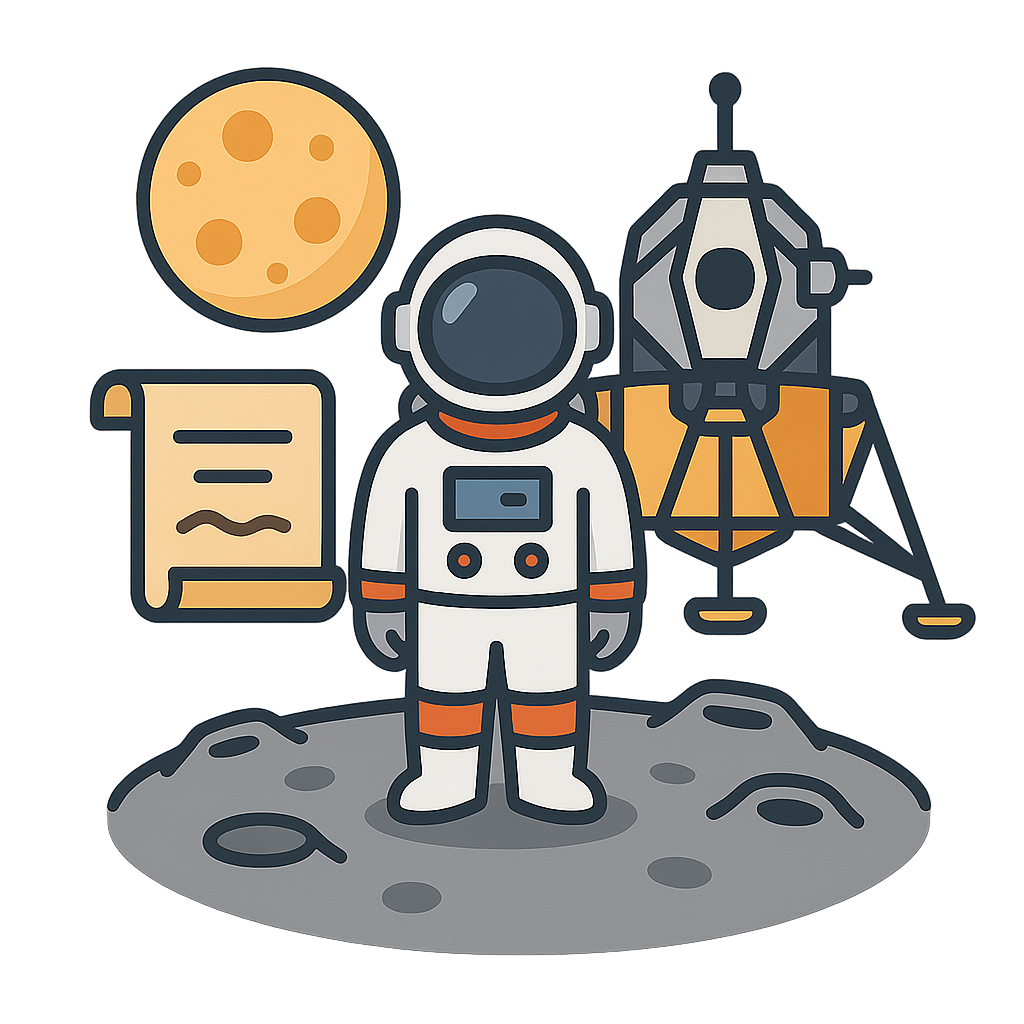
On the morning of July 16, 1969, the three of us lay on our backs inside the tiny capsule atop the most powerful rocket ever built, the Saturn V. When the countdown reached zero, a roar unlike anything I’d ever heard erupted below us. It wasn’t just a sound; it was a feeling, a deep, bone-rattling vibration as 7.5 million pounds of thrust pushed us toward the heavens. The journey to the Moon took four days, a quiet and surreal trip through the blackness of space. Our home planet shrank behind us until it looked like a beautiful, swirling blue and white marble. On July 20th, Buzz and I entered our lunar module, which we had named the Eagle. We separated from Michael and began our descent. Everything was going smoothly until I looked out the window. The computer was taking us toward a crater filled with massive boulders. I knew I had to act fast. I took manual control of the Eagle, my heart pounding as I searched for a safe place to land. With our fuel alarm blaring and only seconds to spare, I finally set us down gently on a flat, gray plain. I keyed the microphone and said the words the whole world was waiting to hear: 'Houston, Tranquility Base here. The Eagle has landed.' A few hours later, I opened the hatch and slowly made my way down the ladder. The ground was a fine, powdery dust. I took a breath and placed my left foot on the surface of the Moon. Looking at the stark, silent, and magnificent landscape, I said, 'That's one small step for a man, one giant leap for mankind.'
Returning to Earth felt like coming home from a different universe. The welcome we received was overwhelming, but the most profound change was the one that happened inside me. During those hours on the Moon, I spent a lot of time just looking back at our planet. From 240,000 miles away, it was a breathtaking sight—a small, fragile 'blue marble' hanging in the vast, dark emptiness of space. There were no borders, no divisions, just one beautiful, shared home for all of us. That perspective changes you forever. It made me realize how precious our world is and how important it is that we take care of it and each other. The Apollo 11 mission was never just about planting a flag. It was about human curiosity, the power of thousands of people working together to achieve the impossible, and the courage to venture into the unknown. That 'one small step' wasn't just my step. It was a step for everyone who ever dared to look up at the sky and dream. It was a giant leap for all of us, a reminder that with determination and teamwork, there are no limits to what we can achieve. So keep looking up, keep asking questions, and never stop dreaming.
Reading Comprehension Questions
Click to see answer