Eva Perón
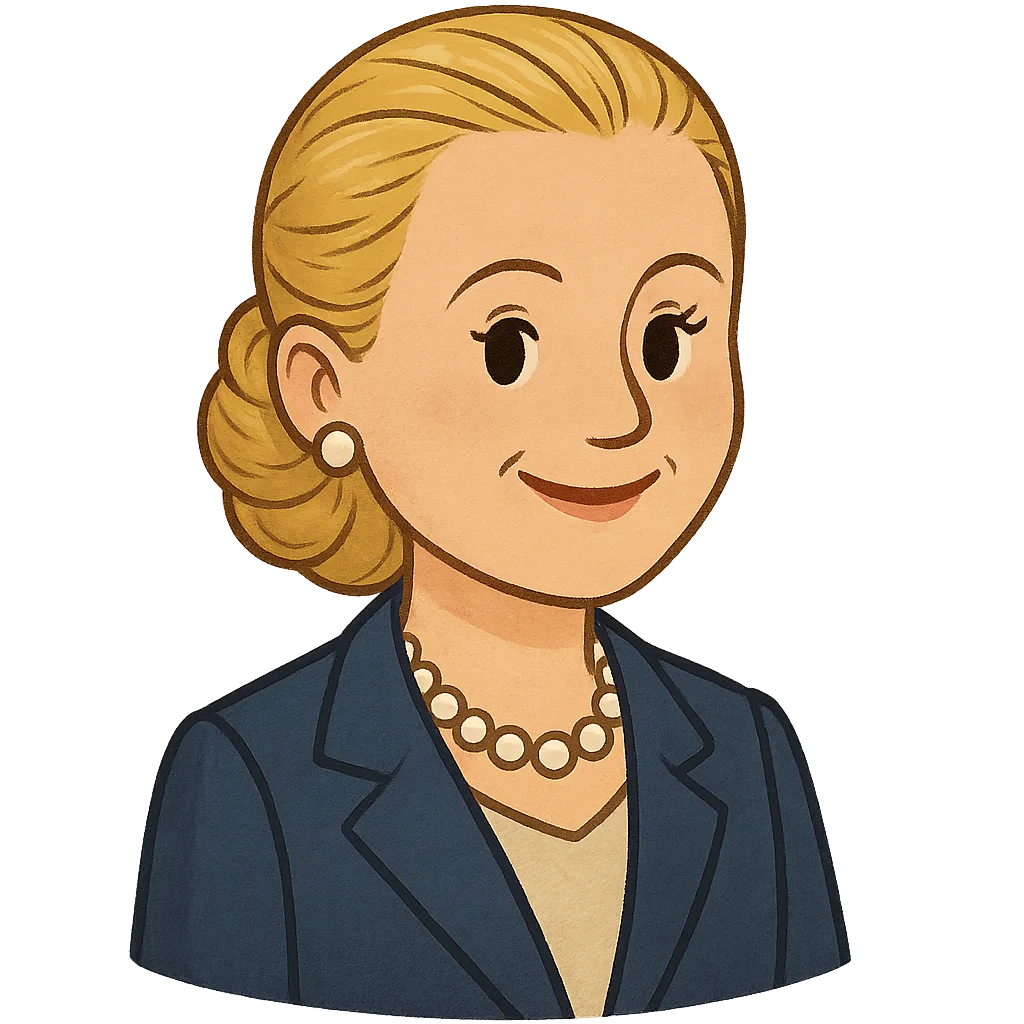
Hello, my name is Eva Perón, but you may know me by the name my people gave me, Evita. My story began in a small, dusty town called Los Toldos, Argentina, where I was born on May 7th, 1919. Life wasn't easy. I grew up in a large family, and we were quite poor, meaning we didn't have much money or many resources. Even in our small home, my dreams were enormous. From a very young age, I knew I wanted to be a famous actress. I would imagine myself on grand stages, performing for huge audiences. That dream felt like it was a million miles away from Los Toldos, but it burned inside me like a constant fire. I knew that to make it happen, I couldn't stay where I was. So, with a heart full of hope and determination, I made a very big decision. At just fifteen years old, I packed my few belongings and moved to the bustling capital city of Buenos Aires to chase my dream of becoming a star.
Buenos Aires was a world away from my quiet hometown. The city was enormous, and at first, I struggled to find my way. It took a lot of hard work and refusing to give up, but eventually, my dream started to come true. I found work as a model, my voice was heard across the country as a radio personality, and I even became a film actress. Life was changing, but my most important change was yet to come. On January 22nd, 1944, a terrible earthquake had struck a part of Argentina, and I attended a fundraiser to help the victims. It was there that I met a man who would change my life forever: a colonel named Juan Perón. We connected instantly. He spoke with such passion about his vision for our country and his deep desire to help the working-class people of Argentina. He called them the 'descamisados,' which means the 'shirtless ones,' because they worked so hard but often had so little to show for it. His ideas resonated with me because I remembered my own poor childhood. I knew then that my stage was about to get much bigger. I became completely involved in his political work, ready to help him fight for the people who had been forgotten.
Our shared passion for helping the descamisados brought us together, and on February 24th, 1946, something amazing happened: Juan Perón was elected president of Argentina. Just like that, I became the First Lady. But I knew from the very beginning that I did not want to be a traditional First Lady, someone who only appeared at fancy parties and smiled for cameras. My heart was with the people, and I wanted my work to reflect that. I set up an office and opened my doors to anyone who needed help. Every day, lines of people would form, and I would sit and listen to their problems, from needing a new pair of shoes to needing a safe place to live. Listening wasn't enough; I needed to take action. So, in 1948, I established the Eva Perón Foundation. This wasn't just a charity; it was a powerful force for change. Through the foundation, we built thousands of hospitals to care for the sick, schools to educate children, and homes to give families shelter and security. We built entire communities, making sure that the poorest people in Argentina finally had the support and resources they deserved.
While my foundation's work was incredibly important to me, there was another fight I was determined to win: the fight for women's right to vote. In the Argentina of my time, women had no voice in who ran our country. Their opinions were not counted, and their futures were decided for them. I believed this was a great injustice. How could our nation be strong if half of its people were silenced? I argued that women deserved an equal voice in our country's democracy. I gave speeches and traveled across the country, encouraging women to demand their rights. It was a long and difficult struggle, but it was one of my proudest achievements when, on September 9th, 1947, the law was finally passed giving all women in Argentina the right to vote. I will never forget the feeling of joy and pride that washed over me. But the most incredible moment came in 1951, when I saw women all across the nation lining up to cast their ballots for the very first time. They were no longer invisible; they were powerful.
My dedication to my people was my entire life, but my body began to fail me. I became very ill, and I had to slow down my work, which was the hardest thing I ever had to do. Even though I couldn't be in my office every day, my heart was still with the descamisados. During this time, the people of Argentina gave me a very special title: 'Spiritual Leader of the Nation.' This honor meant the world to me because it showed that our connection went beyond politics; it was a bond of love and trust. My time on Earth was shorter than I would have liked, and I passed away later in my life. My greatest hope was that I would not be remembered simply as a First Lady or an actress. I wanted to be remembered as Evita, a bridge of love and hope connecting the government with the people it served. I hope that my fight for the poor and for the rights of women continues to inspire others to stand up for what is right and to work for a fairer world.
Reading Comprehension Questions
Click to see answer